
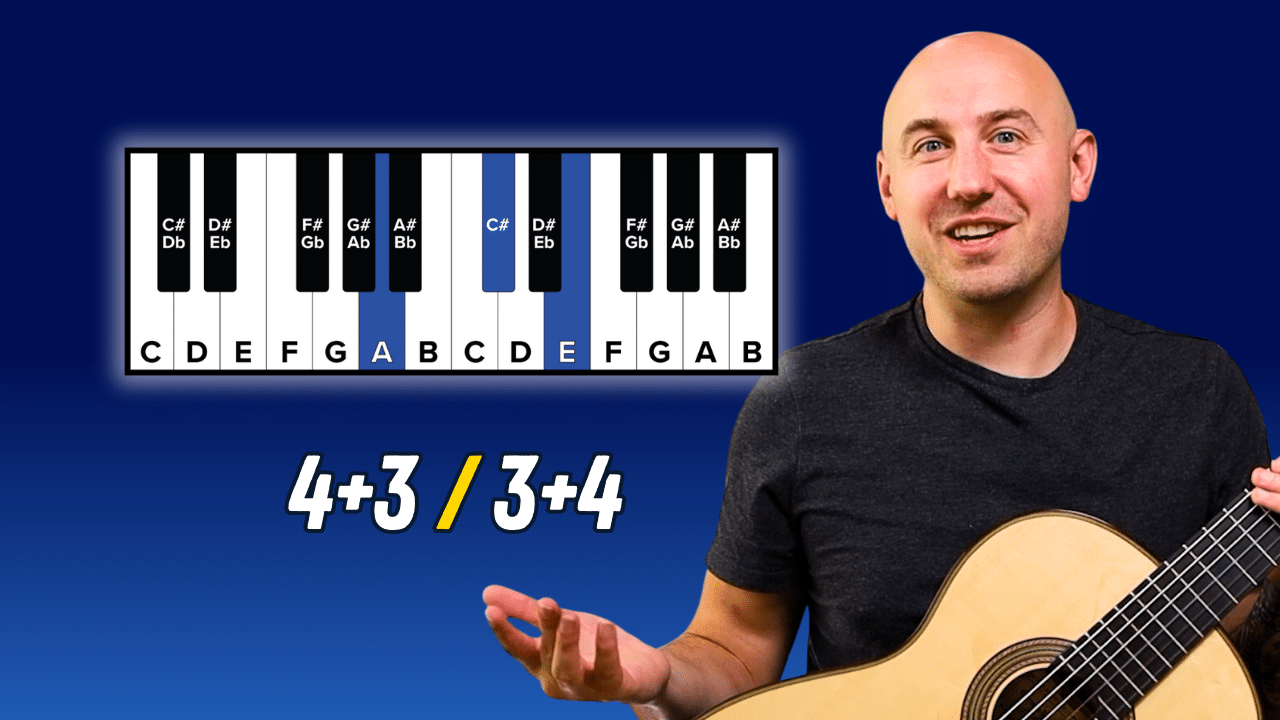
You already know what chords are. You know about the root, third, and fifth. You’ve maybe even played hundreds of them on guitar.
But here’s the next question:
“How do I actually build a chord from scratch?”
In this lesson from my 30 Day Guitar Chord Fluency course, we’re going to break down exactly how to construct a chord — step by step. No guesswork. No memorizing random shapes. Just simple formulas you can use over and over again.
By the end of this article, you’ll know:
- the major chord formula and minor chord formula
- the difference between a major third and a minor third
- how to turn a major chord into a minor chord (it’s easier than you think)
- the diminished chord formula and augmented chord formula
Let’s dive in.
How to Build Major and Minor Chords from scratch
We’ll go through several examples of building major and minor chords, and explain how these chords are made. By the end, you’ll be able to build any major or minor chord yourself!
How to Build Diminished and Augmented Chords from scratch
We’ll go through a couple of examples of building diminished and augmented chords. Hear how these less common chords sound and why the note spacing makes total sense!
Jump to Section:
- The Basics: Music Theory for Learning Chords
- Major Third vs Minor Third: The Key to Everything
- How to Make a Major Chord
- How to Make a Minor Chord
- How to Turn a Major Chord Into a Minor Chord
- How to Make a Diminished Chord
- How to Make an Augmented Chord
- Chord Formula Cheat Sheet
- Practice & Next Steps (+ Free Chord Builder Flashcard Games)
The Basics: Music Theory for Learning Chords
Before we start building chords, let’s make sure we’re on the same page with a few basics.
If you haven’t already, I highly recommend checking out my lesson on What Are Chords? 5 Rules to Remember. It covers the foundation we’re building on here.
The Musical Alphabet
Music uses seven letters: A – B – C – D – E – F – G. Then it repeats.
Between most of those letters, there’s a black key on the piano. That black key is a sharp (♯) or flat (♭) — depending on which direction you’re coming from.
Half Steps and Whole Steps
A half step is the smallest distance between two notes. On piano, it’s the very next key — white or black. On guitar, it’s one fret.
A whole step is two half steps. On guitar, that’s two frets.
Here’s how the natural notes are spaced:
- A to B = whole step
- B to C = half step (no black key between them)
- C to D = whole step
- D to E = whole step
- E to F = half step (no black key between them)
- F to G = whole step
- G to A = whole step
Those two half steps — B to C and E to F — are really important. Keep them in mind as we go.
Why I Use a Keyboard to Explain This
I know — I’m a guitar guy! But honestly, the piano keyboard is the easiest way to see the space between notes.
On a keyboard, the layout is simple. White keys and black keys. You can literally see and count the distance between any two notes. It’s music theory in black and white.
Once you understand the spacing on a keyboard, it transfers right over to guitar. I promise.
Major Third vs Minor Third: The Key to Everything
This is the single most important concept in this entire lesson. If you get this, everything else falls into place.
Chords are all about spatial relationships between notes. And the two intervals that matter most right now are the major third interval and the minor third interval.
What is a Major Third?
A major third is a distance of 4 half steps.
That’s it. Count up 4 half steps from any note, and you’ve found the major third above it.
For example: C to E is 4 half steps (C → C♯ → D → D♯ → E). That’s a major third interval.
What is a Minor Third?
A minor third is a distance of 3 half steps.
For example: E to G is 3 half steps (E → F → F♯ → G). That’s a minor third interval.
Major Third vs Minor Third — The Quick Comparison
Here’s the simple breakdown:
- Major third (M³) = 4 half steps (wider spacing)
- Minor third (m³) = 3 half steps (tighter spacing)
You’ll often see these written as M³ (capital M, superscript 3) for a major third and m³ (lowercase m, superscript 3) for a minor third. These abbreviations show up in music theory all the time, so it’s good to recognize them now.
The difference between a major third vs minor third is just one half step. But that one half step completely changes how a chord sounds and feels.
Major thirds sound bright. Minor thirds sound darker. And when you stack these intervals on top of each other, you get different types of chords. That’s really the whole game.
How to Make a Major Chord
Now we’re ready to build. Let’s start with major chords.
The major chord formula is:
Major Third + Minor Third (M³ + m³)
(4 half steps + 3 half steps)
That’s it. Start on your root note, go up 4 half steps to find the third, then go up 3 more half steps to find the fifth.
Example: C Major
We already know from our previous lesson that C major is C – E – G. Let’s prove it with the formula.
Root: C
Count up 4 half steps from C:
C → C♯ (1) → D (2) → D♯ (3) → E (4)
So C to E = major third. ✓

Now count up 3 half steps from E:
E → F (1) → F♯ (2) → G (3)
E to G = minor third. ✓
C major = C – E – G. Major third plus minor third. Done!

Example: A Major (with a sharp!)
How to make ANY Major Chord – A Major example
Here’s where it gets interesting. Not every chord uses only natural notes.
Check out this example to see how to build an A major chord in real time!
Start on A. Count 4 half steps:
A → A♯ (1) → B (2) → C (3) → C♯ (4)
A to C♯ = major third. ✓
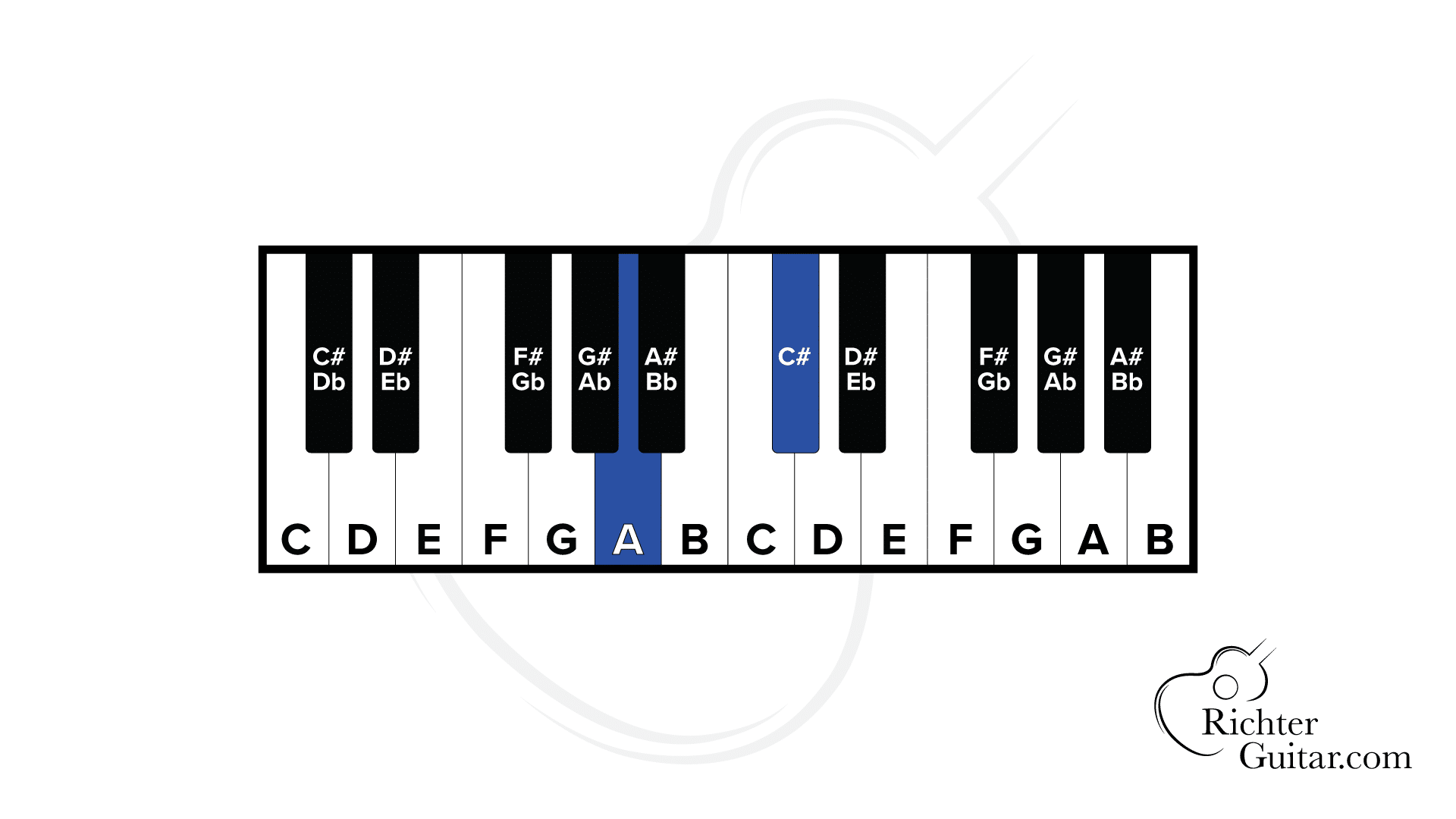
Now count 3 half steps from C♯:
C♯ → D (1) → D♯ (2) → E (3)
C♯ to E = minor third. ✓
A major = A – C♯ – E

See that C♯ in there? That’s totally normal. Many major chords have sharps or flats in them. The formula still works exactly the same way.
Why C♯ and not D♭?
Great question! Even though C♯ and D♭ are the same pitch, we use C♯ here because chords are spelled using every other letter of the musical alphabet.
A – C – E follows the every-other-letter rule. A – D – E does not. So the middle note has to be some kind of C — in this case, C♯.
How to Make a Minor Chord
Here’s the exciting part about minor chords. The formula is almost the same as major — just reversed!
The minor chord formula is:
Minor Third + Major Third (m³ + M³)
(3 half steps + 4 half steps)
Instead of going wide first and then narrow, you go narrow first and then wide.
Example: A Minor
A minor is spelled A – C – E. Let’s check the minor chord structure.
Count 3 half steps from A:
A → A♯ (1) → B (2) → C (3)
A to C = minor third. ✓
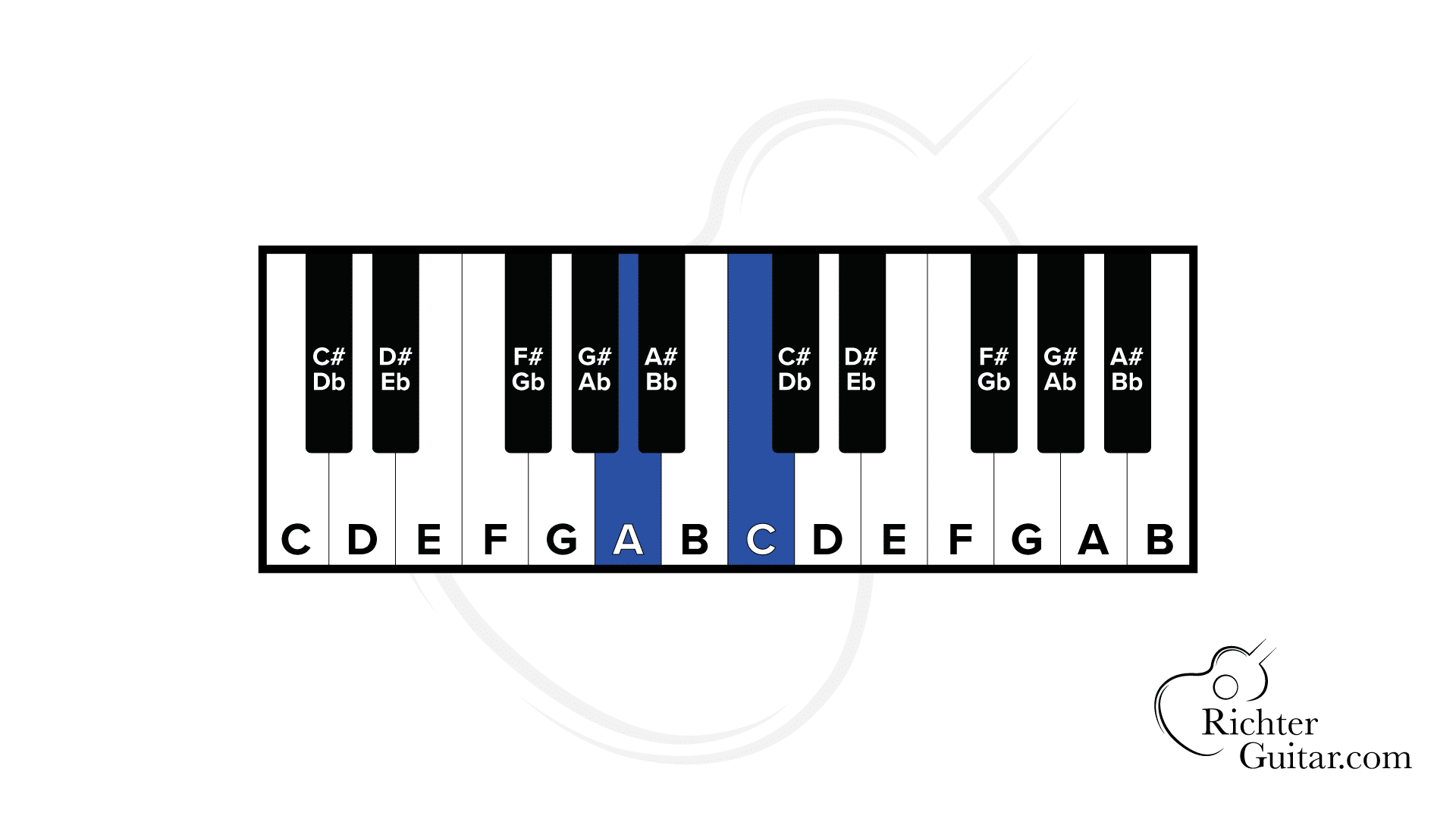
Count 4 half steps from C:
C → C♯ (1) → D (2) → D♯ (3) → E (4)
C to E = major third. ✓
A minor = A – C – E. Three plus four. Minor third plus major third.

Example: D Minor
Let’s do one more. Start on D. The letters are D – F – A.
Count 3 half steps from D:
D → D♯ (1) → E (2) → F (3)
D to F = minor third. ✓
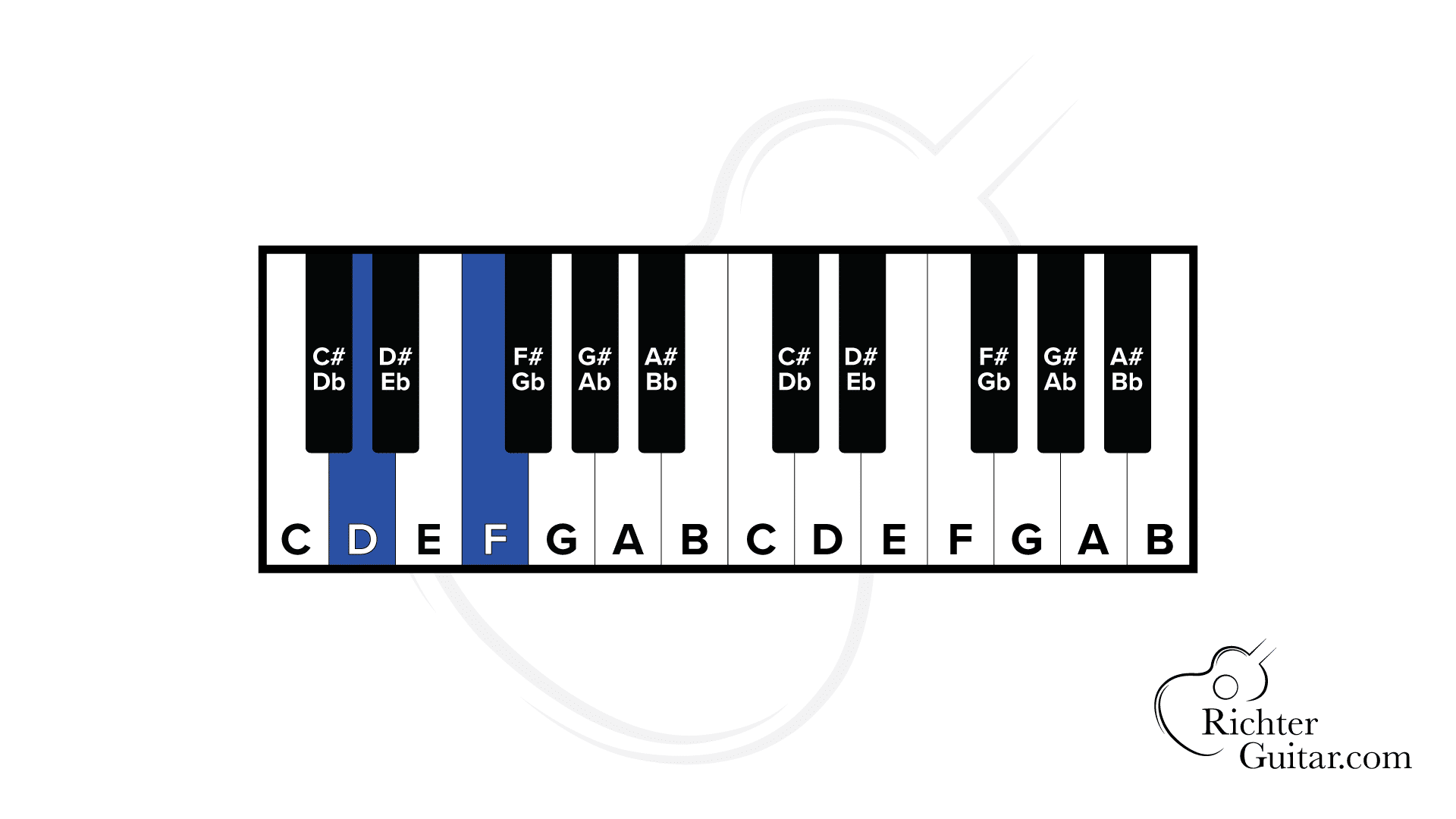
Count 4 half steps from F:
F → F♯ (1) → G (2) → G♯ (3) → A (4)
F to A = major third. ✓

D minor = D – F – A. The formula works perfectly.
How to Turn a Major Chord Into a Minor Chord
This is one of my favorite things to show students. It’s so simple and so powerful.
To turn any major chord into a minor chord, just lower the third by one half step.
That’s it. One note changes. One half step down. The root stays the same. The fifth stays the same. Only the third moves.
Example: D Major → D Minor
D major is D – F♯ – A (major third + minor third).
Lower the F♯ by one half step and it becomes F natural.
Now you have D – F – A (minor third + major third). That’s D minor!


On guitar, think about this. Your D major chord has an F♯ on the first string. Your D minor chord has an F natural on that same string — one fret lower.
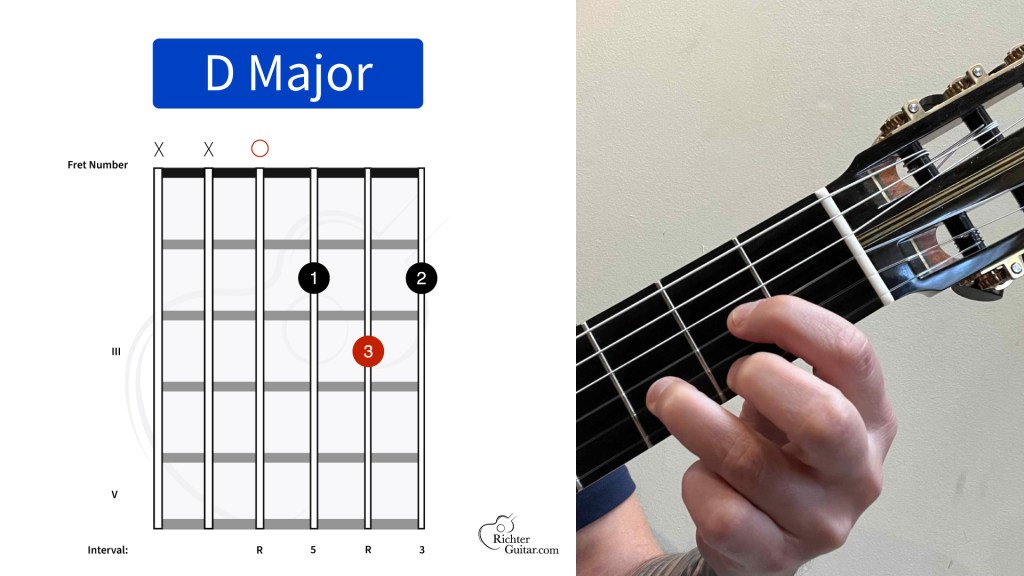
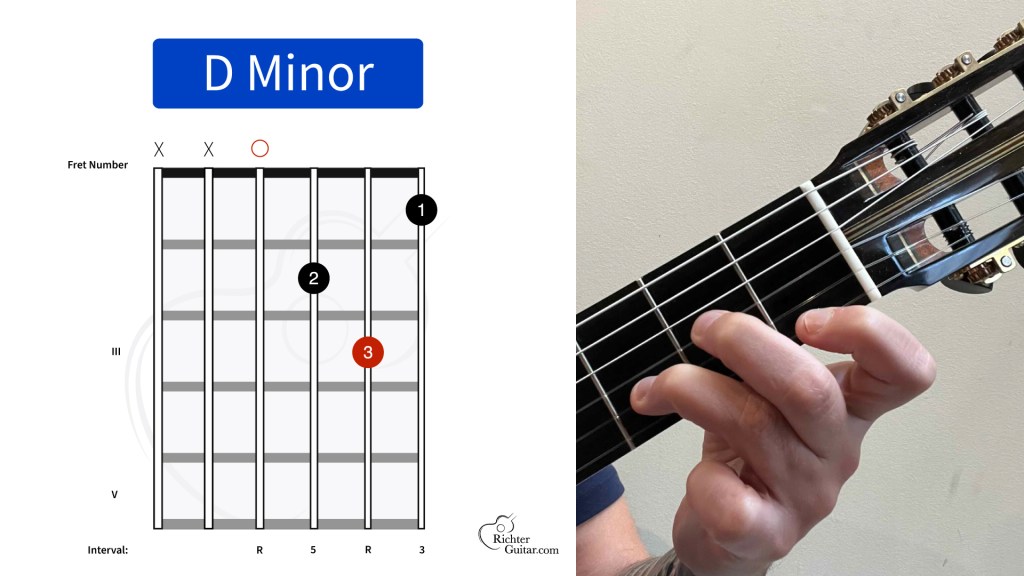
It’s pretty amazing how one little half step has such a big impact on our ears. That tiny change completely shifts the emotion — from bright and happy to dark and reflective.
How to Make a Diminished Chord
Now let’s talk about two less common — but really cool — chord types.
If you’ve been following along with the major third and minor third idea, this is going to come pretty easy.
The diminished chord formula is:
Minor Third + Minor Third (m³ + m³)
(3 half steps + 3 half steps)
Both intervals are minor thirds. The spacing is as tight as it can get. And you can hear that tension!
Example: B Diminished
How to make Diminished Chords – Bdim Example
Why do diminished chords sound so tense and make you feel “trapped”?
Check out this example to see how to build an B diminished chord in real time – and hear the tension for yourself!
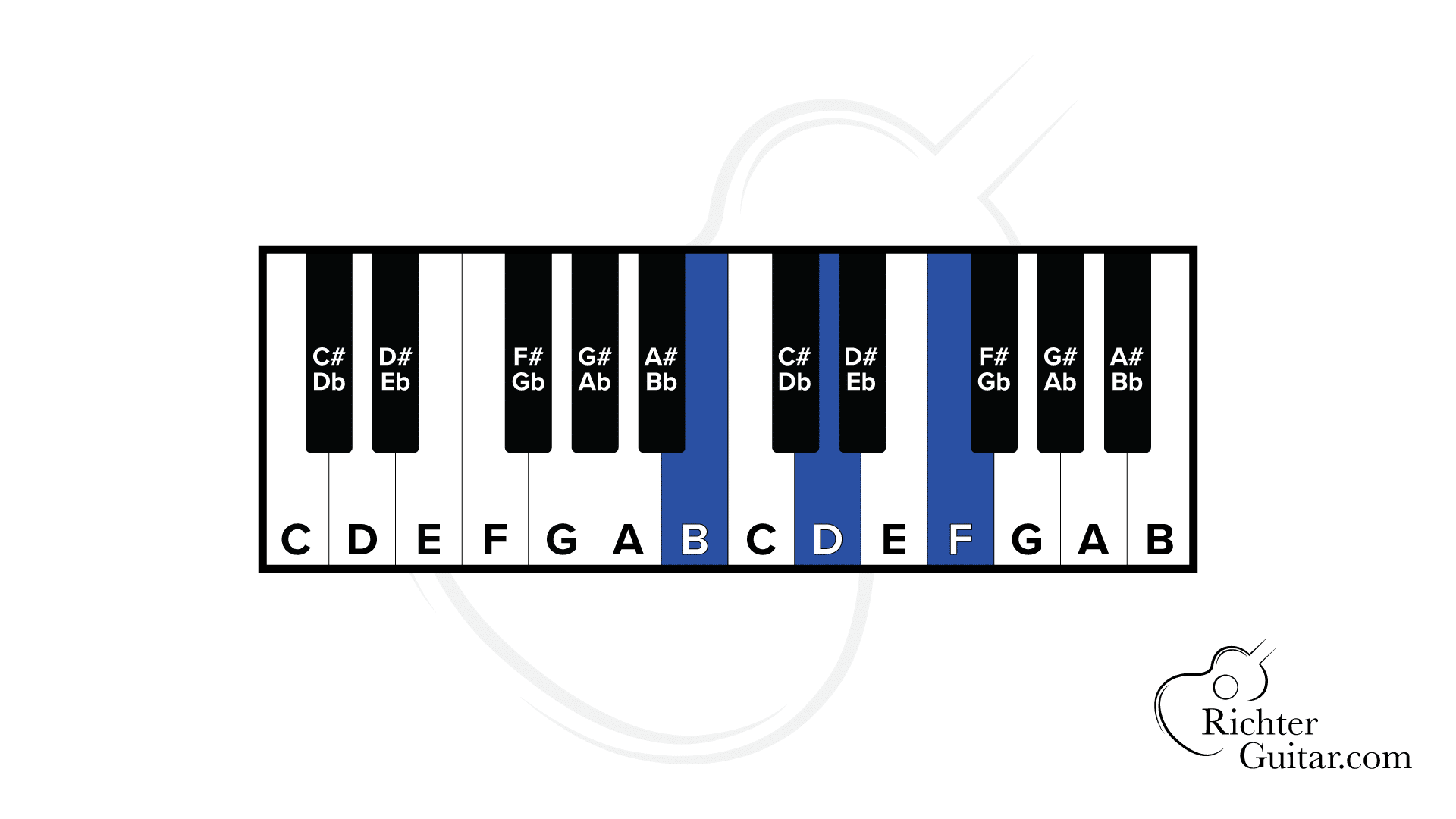
Start on B. The letters are B – D – F.
Count 3 half steps from B:
B → C (1) → C♯ (2) → D (3)
B to D = minor third. ✓

Count 3 half steps from D:
D → D♯ (1) → E (2) → F (3)
D to F = minor third. ✓
B diminished = B – D – F. Three plus three. Two minor thirds stacked.
What Does a Diminished Chord Sound Like?
I always think of old horror movies. The door creaks open slowly… and then you hear that chord.
Diminished chords sound tense, dark, and unstable. It’s like you’re trapped with no way out. And that makes sense — the notes are packed as tightly together as possible.
That tight spacing literally creates the feeling of tension and constraint. Pretty cool, right?
How to Make an Augmented Chord
If diminished chords are the tightest possible spacing, augmented chords are the widest.
The augmented chord formula is:
Major Third + Major Third (M³ + M³)
(4 half steps + 4 half steps)
Both intervals are major thirds. Everything is stretched as far apart as it can go.
Example: C Augmented
Start with C. We know C to E is a major third (4 half steps). Now instead of going up only 3 half steps to G, we go up 4.
Count 4 half steps from E:
E → F (1) → F♯ (2) → G (3) → G♯ (4)
C augmented = C – E – G♯

Notice we raised the G to G♯. We can’t call it A♭ because we need to spell the chord using every other letter: C – E – G. So it has to be some kind of G — in this case, G♯.
What Does an Augmented Chord Sound Like?
Do you feel like you’re floating into the abyss? Lost in outer space?
That’s the augmented sound. It’s spacious, dreamy, and unresolved. You’ll hear it a lot in film scores and atmospheric music.
On guitar, augmented chords don’t show up as often as the other three types. You won’t strum them in most pop or rock songs. But when they do appear — especially in fingerpicking — they create a really unique emotional effect.
Chord Formula Cheat Sheet
Here’s everything we covered in one quick reference:
| Chord Type | Formula | Half Steps | Sound/Feel |
|---|---|---|---|
| Major | M³ + m³ | 4 + 3 | Bright, happy, stable |
| Minor | m³ + M³ | 3 + 4 | Dark, reflective, sad |
| Diminished | m³ + m³ | 3 + 3 | Tense, suspenseful, trapped |
| Augmented | M³ + M³ | 4 + 4 | Spacious, dreamy, outer space |
Notice the beautiful pattern here. Every chord is just a combination of major thirds and minor thirds. That’s really all there is to it.
Practice: Start Building Chords on Your Own
Now it’s your turn. Here’s how to put these formulas into action today.
1) Build every major chord
Pick a letter — any letter. Write out the root, third, and fifth using every other letter. Then count your half steps: 4 up from the root, then 3 more. Does it match? If you need to add a sharp or flat, that’s perfectly fine.
2) Build every minor chord
Same process, but now count 3 half steps first, then 4. Compare your result to the major version. You should see that only the third changed — by just one half step.
3) Try a diminished chord and an augmented chord
Use the same letter. Build it with 3 + 3 for diminished and 4 + 4 for augmented. Play them on your guitar or keyboard and listen to how different they feel.
4) Use a keyboard as a reference
If you have access to a keyboard (even a free app on your phone), use it to count half steps visually. It makes the spacing much easier to see. Once the spacing clicks in your head, it transfers right over to guitar.
5) Compare all four chord types on the same root
This is a great ear training exercise. Pick one root note — say, C — and play:
- C major (C – E – G)
- C minor (C – E♭ – G)
- C diminished (C – E♭ – G♭)
- C augmented (C – E – G♯)
Listen to each one. Notice how one or two notes shifting by a half step completely changes the emotion. That’s the power of understanding how to construct a chord from the inside out.
6) Test yourself with these free chord builder quizzes
Once you’ve practiced building chords on paper, try these free flashcard games from musictheory.net. Each one gives you a stack of notes (root, 3rd, 5th) and asks you to adjust the notes to spell the chord correctly.
I’ve arranged them from easiest to hardest. Start with the first one and work your way up!
Chord Builder: Major & Minor Triads (Root Position)
Practice building major and minor chords in root position. You’ll only need to adjust the 3rd and/or the 5th — the root stays locked in place. This is the perfect starting point.
Chord Builder: Major & Minor Triads (+ Inversions)
Same idea, but now the chords can appear in any position. That means the root, 3rd, or 5th might be in the bass. If you remember our lesson on inversions, this is a great way to put that knowledge to the test.
Chord Builder: Major, Minor, Diminished & Augmented (Root Position)
Now we’re adding diminished and augmented chords into the mix — still in root position only. Use your formulas: 4+3 for major, 3+4 for minor, 3+3 for diminished, 4+4 for augmented.
Chord Builder: Major, Minor, Diminished & Augmented (+ Inversions)
This is the full challenge — all four chord types in any position. If you can nail this one consistently, you’ve got serious chord-building fluency!
Want to keep going? Check out the full Guitar Chord Library to see charts and images for all the basic chords. And if you haven’t already, make sure to read What Are Chords? 5 Rules to Remember — it’s the perfect companion to this lesson.
Happy practicing — and I’ll see you in the next one!