
“Zombie” is The Cranberries’ iconic 1994 protest song — and one of the most satisfying four-chord songs you can learn on guitar. The whole song cycles through the same progression: Em → C → G → D. That’s it. Verse, chorus, instrumental, solo — all of it built on the same four chords repeating in the same order.
The one wrinkle is that the original recording uses D/F# (a D chord with F# in the bass) instead of a plain D. It’s an optional flourish that gives the song its haunting, descending bass line — but plain D works just as well if you’re not ready for it yet. We’ll cover both options below. This is the same arrangement I teach in my 30 Day Guitar Chord Fluency course. Let’s dive in!
The Chords You’ll Need
For the verse


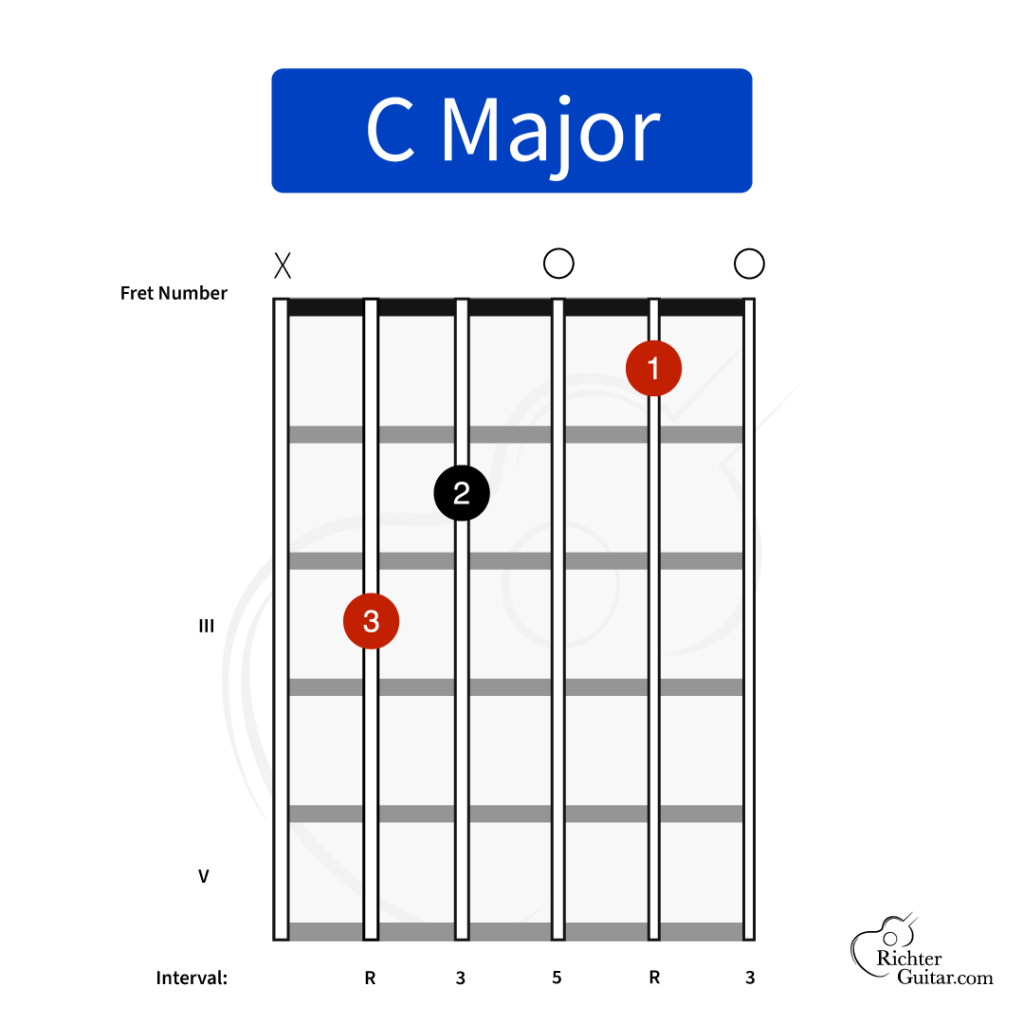

Optional bass embellishment
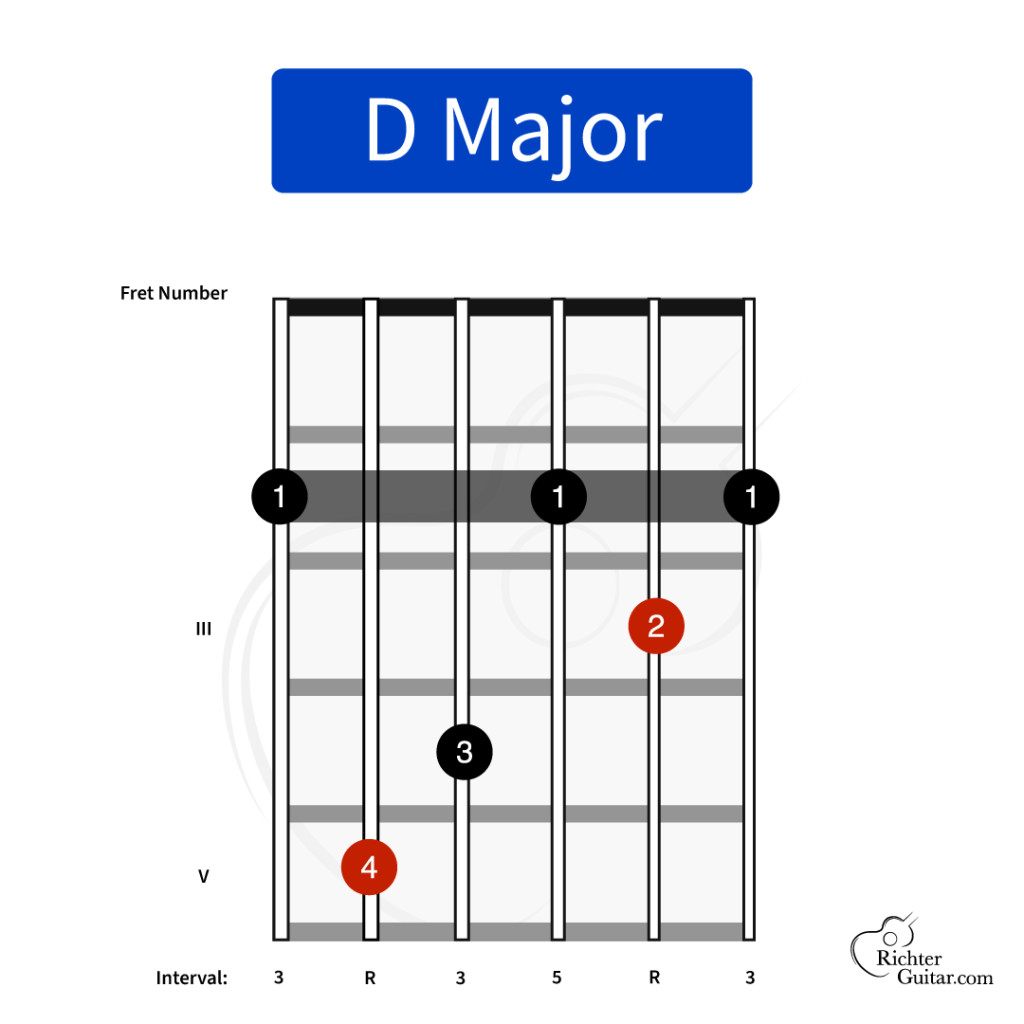
Chord Chart
Intro

Em  C  G  D/F#     (x4)

Verse 1

Em           C                 G               D/F#
   Another head hangs lowly, child is slowly taken
Em                    C                   G              D/F#
   And the violence caused such silence, who are we mistaken
          Em                       C
But you see it's not me, it's not my family
           G                             D/F#
In your head, in your head, they are fighting
              Em                              C
With their tanks and their bombs and their bombs and their guns
           G                            D/F#
in your head, in your head, they are crying

Chorus 1

        Em            C          G               D/F#
In your head, in your head, zombie, zombie, zombie
               Em            C           G              D/F#
What's in your head, in your head, zombie, zombie, zombie

Instrumental

Em  C  G  D/F#     (x2)

Verse 2

Em           C                  G             D/F#
   Another mother's breaking heart is taking over
Em                     C              G              D/F#
   When the violence causes silence, we must be mistaken
           Em                  C
It's the same old theme since 1916
          G                                   D/F#
In your head, in your head, they're still fighting
              Em                              C
With their tanks and their bombs and their bombs and their guns
           G                           D/F#
In your head, in your head, they are dying

Chorus 2

        Em            C           G              D/F#
In your head, in your head, zombie, zombie, zombie
               Em            C           G              D/F#
What's in your head, in your head, zombie, zombie, zombie

Instrumental 2

Em  C  G  D/F#     (x2)
Em  C  Em  C     (x2)

Solo

Em  C  G  D/F#     (x3)

Outro

Em  C  Em  C
Em  C  Em
About D/F# (and how to substitute plain D)
The “D/F#” notation means a D major chord played with F# in the bass — same chord
as D, just with a different lowest note. There are two ways to play it:
1. The half-barre version (easier): Use a half barre with finger 1 on the 2nd fret across the high E and G strings, finger 2 on the B string at the 3rd fret, and finger 3 on the D string at the 4th fret (the F# bass). Don’t play the low E or A strings.
2. The full-barre version (harder, fuller sound): Play a C major chord shape with a full barre across all six strings at the 2nd fret. F# now sits on the low E string in the bass position, giving the chord much more low-end depth.
If neither feels right yet, just play a plain D chord in its place. The song still works beautifully — you just lose the descending bass line that gives D/F# its musical magic.
1. The half-barre version (easier): Use a half barre with finger 1 on the 2nd fret across the high E and G strings, finger 2 on the B string at the 3rd fret, and finger 3 on the D string at the 4th fret (the F# bass). Don’t play the low E or A strings.
2. The full-barre version (harder, fuller sound): Play a C major chord shape with a full barre across all six strings at the 2nd fret. F# now sits on the low E string in the bass position, giving the chord much more low-end depth.
If neither feels right yet, just play a plain D chord in its place. The song still works beautifully — you just lose the descending bass line that gives D/F# its musical magic.
About that descending bass line
The whole reason to use D/F# instead of plain D is the bass line it creates. When
the progression goes G → D/F# → Em, the bass moves smoothly down by step:
G → F# → E That stepwise descent is what gives “Zombie” its
haunting, melodic quality and is one of the most common harmonic techniques in
rock and pop. Without D/F#, the bass jumps awkwardly from G down to D and back up
to E. Plain D works fine, but D/F# is what lets the song flow.
Practice Tips
- The four-chord cycle Em → C → G → D (or D/F#) is the entire song. Loop it on its own at slow tempo until the changes feel automatic. Once that loop is smooth, you can play every section of “Zombie.”
- The strumming feel is steady and driving without being aggressive — it pulses rather than punches. A consistent down-down-up rhythm carries the song’s energy. Listen to the recording a few times to feel the pulse before adding lyrics.
- Spend extra time on the G → D/F# → Em transition. That’s the song’s harmonic signature. Practice it slowly until you can hear the bass line descending step by step (G → F# → E).
- If you’re working on barre chords, this song is a great practice ground for the full-barre D/F#. Try playing G as a barred E-major shape at the 3rd fret, then moving down one fret to the 2nd fret and switching to a C-shape barre for D/F#.