
“Losing My Religion” is one of R.E.M.’s most beloved songs and a great fit for players ready to start exploring barre chords in a real musical context. Most of the song stays comfortably in basic open-chord territory (Am, Em, Dm, G), but the bridge brings in F major — typically a beginner’s first barre chord.
The good news: the song gives you plenty of practice with the F shape, and there’s a useful trick for getting from G to F that we’ll cover below.
The Chords You’ll Need
Main chords


Optional embellishments

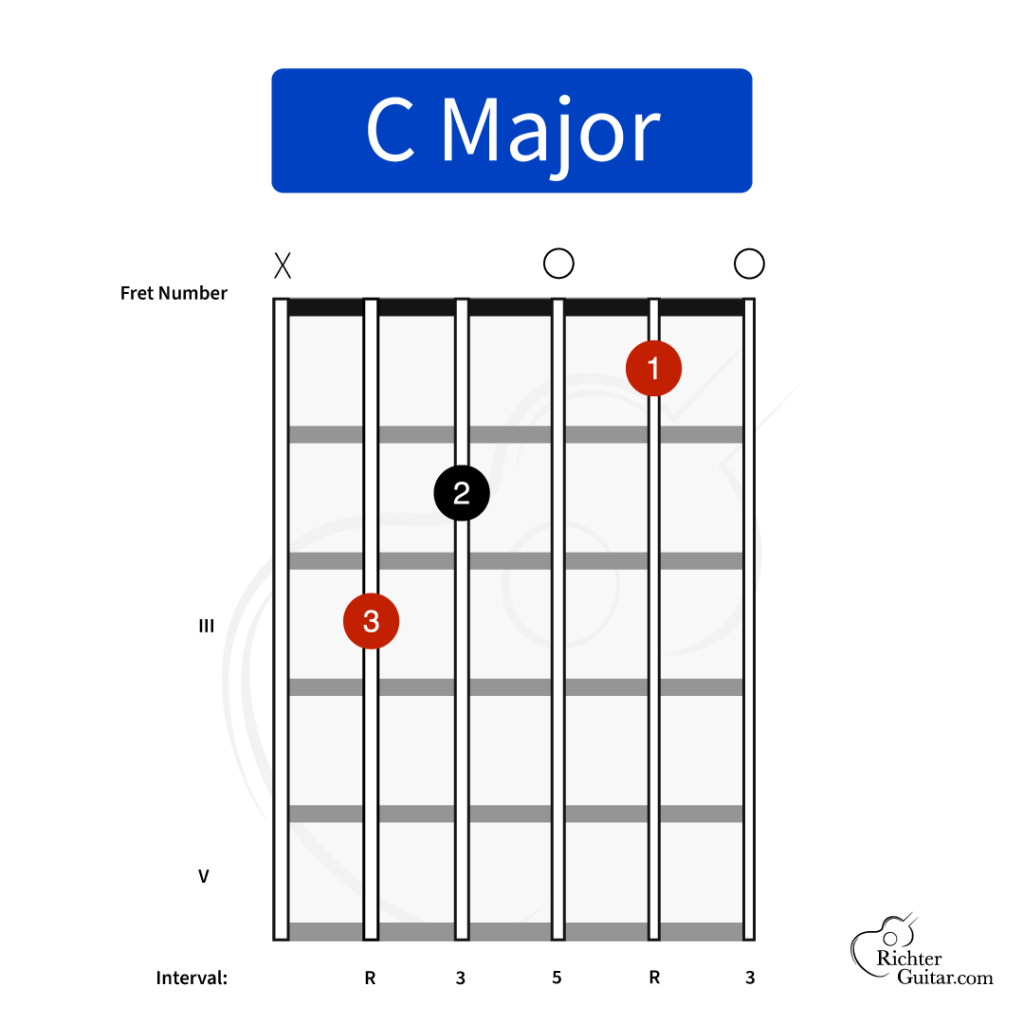
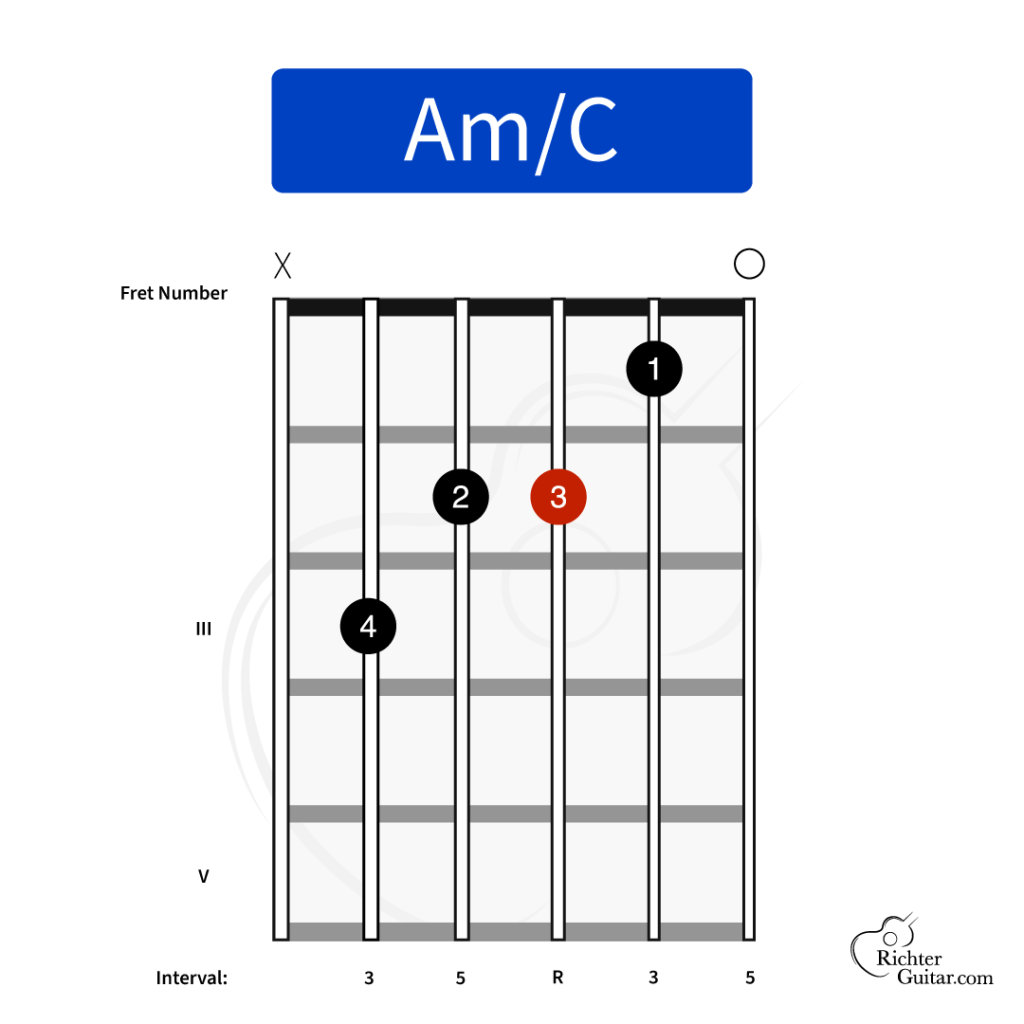

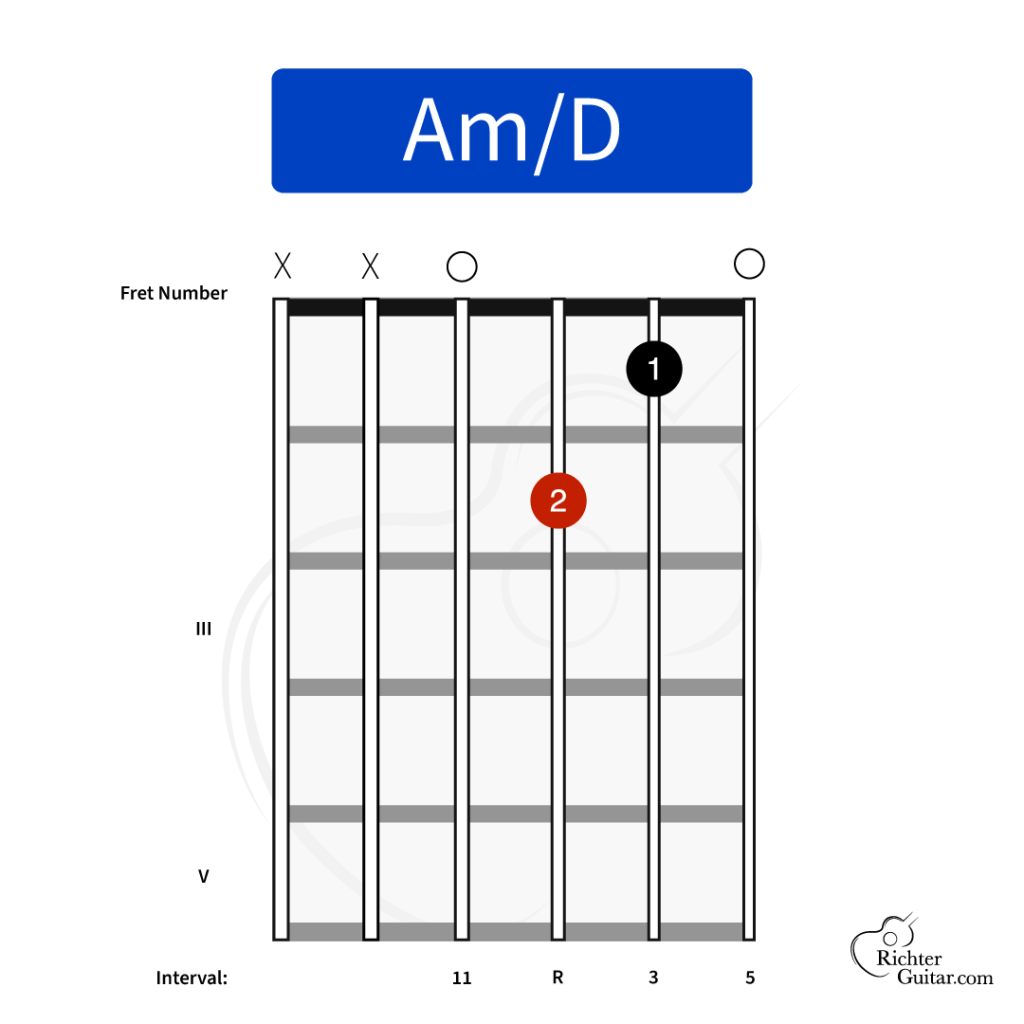
Chord Chart
Intro

F           Dm G     Am    Am/B     Am/C   Am/D Am
F           Dm G     Am       G

Verse 1

    Am              Em
Oh, life is bigger

It's bigger than you
            Am
And you are not me.
                        Em
The lengths that I will go to,
                     Am      Em
The distance in your eyes,
                     Dm
Oh no, I've said too much,
         G
I set it up.

Chorus 1

                 Am
That's me in the corner,
                 Em
That's me in the spotlight
            Am
Losing my religion.
          Em
Trying to keep up with you.
      Am                          Em
And I don't know if I can do it.
                     Dm
Oh no, I've said too much,
                G
I haven't said enough.

Bridge 1

  G                        F
I thought that I heard you laughing,
  Dm             G         Am   Am/B   Am/C   Am/D
I thought that I heard you sing.
Am   F               Dm   G   Am     G
I  think I thought I saw  you try.

Verse 2

          Am                   Em
Every whisper of every waking hour
                   Am
I'm choosing my confessions,
          Em
Trying to keep an eye on you
       Am                                 Em
Like a hurt lost and blinded fool, fool
                     Dm
Oh no, I've said too much,
         G
I set it up.

Verse 3

         Am
Consider this, consider this,
    Em
The hint of a century,
         Am
Consider this: the slip
     Em
That brought me to my knees failed.
Am
What if all these fantasies
     Em
Come    flailing around?
         Dm       G
Now I've said too much.

Bridge 2

    G                       F
I thought that I heard you laughing,
        Dm        G         Am   Am/B   Am/C   Am/D
I thought that I heard you sing.
Am   F               Dm  G   Am    G
I  think I thought I saw you try.

Interlude

   Am                      G
e|-12-12-12-10-10-10-10-10-8-8-8-5-5-5-5-5-|
B|-----------------------------------------|
G|-----------------------------------------|
D|-----------------------------------------|
A|-----------------------------------------|
E|-----------------------------------------|

   F                       G
e|-12-12-12-10-10-10-10-10-8-8-8-5-5-5-5-5-|
B|-----------------------------------------|
G|-----------------------------------------|
D|-----------------------------------------|
A|-----------------------------------------|
E|-----------------------------------------|

    C               D7sus2
But that was just a dream,
C               D7sus2
That was just a dream.

Chorus 2

                 Am
That's me in the corner,
                 Em
That's me in the spotlight
            Am
Losing my religion.
          Em
Trying to keep up with you.
      Am                           Em
And I don't know if I can do it.
                     Dm
Oh no, I've said too much,
                G
I haven't said enough.

Bridge 3 (extended)

    G                        F
I thought that I heard you laughing,
  Dm             G         Am   Am/B   Am/C   Am/D
I thought that I heard you sing.
Am F                  Dm  G   Am   Am/B   Am/C   Am/D   Am
I  think I thought I saw you try.
    F               Dm   G
But that was just a dream,
Am   Am/B   Am/C   Am/D   Am
Try, cry,   why,   try.
F                      Dm  G      Am            G
That was just a dream,    just a dream, just a dream, dream.

Outro

  Am
e|-12-12-12-12-12-12-12-12-|
B|-------------------------|
G|-------------------------|     (x7)
D|-------------------------|
A|-------------------------|
E|-------------------------|

e|-12-10-------10----------|-----------------|
B|-------13-10----13-10-13-|-10--------------|
G|-------------------------|-----------------|
D|-------------------------|-----------------|
A|-------------------------|-----------------|
E|-------------------------|-----------------|
About F major (and a transition tip)
F is the only barre chord in the song. Pro tip: also play G as a barred E-major
shape at the 3rd fret. Then F is just the same shape slid down to the 1st fret —
same fingers, same shape, your hand barely moves.
About the bass walks (Am/B, Am/C, Am/D)
These are just Am with different bass notes. Hold a regular Am chord and add a
finger on the A string at the 2nd fret (B), 3rd fret (C), or 5th fret (D). The
walking bass line ascends through the bridge and adds melodic motion under the
held vocal. Optional — you can hold plain Am instead and the song still works.
Am/D vs D7sus2
You’ll notice from the chord charts above these are actually the same exact shape with the same fingering. However, notice how the intervals change based on the context of when it’s played.
Practice Tips
- Master the verse first. Am → Em → Dm → G covers most of the song. Once that loop is smooth, the chorus uses the same chords in nearly the same order.
- The G-to-F transition in the bridge is the song’s biggest technical moment. Drill it on its own using the barred-G trick from the note above — it makes the change much cleaner than going from open G to F.
- The bass walks (Am/B, Am/C, Am/D) are optional. Hold Am through that section if they aren’t clicking yet. The song still sounds great.
- The interlude’s high-string melody is iconic — it’s actually played on a mandolin in the original recording. Try learning it once everything else feels comfortable; it’s all on the high E string and easier than it looks.