
“Blowin’ in the Wind” is Bob Dylan’s 1962 protest anthem and one of the most influential folk songs ever written. It’s also a perfect entry into the G major collection – built on just three open chords (G, C, and D) and rooted in Dylan’s gentle strumming style.
The original recording sounds in D major, but on guitar it’s most commonly played using G major shapes — capo on the 7th fret matches the recording’s pitch exactly. The capo is optional though. Without it, you’ll play in true G major and the song still sounds beautiful.
The Chords You’ll Need

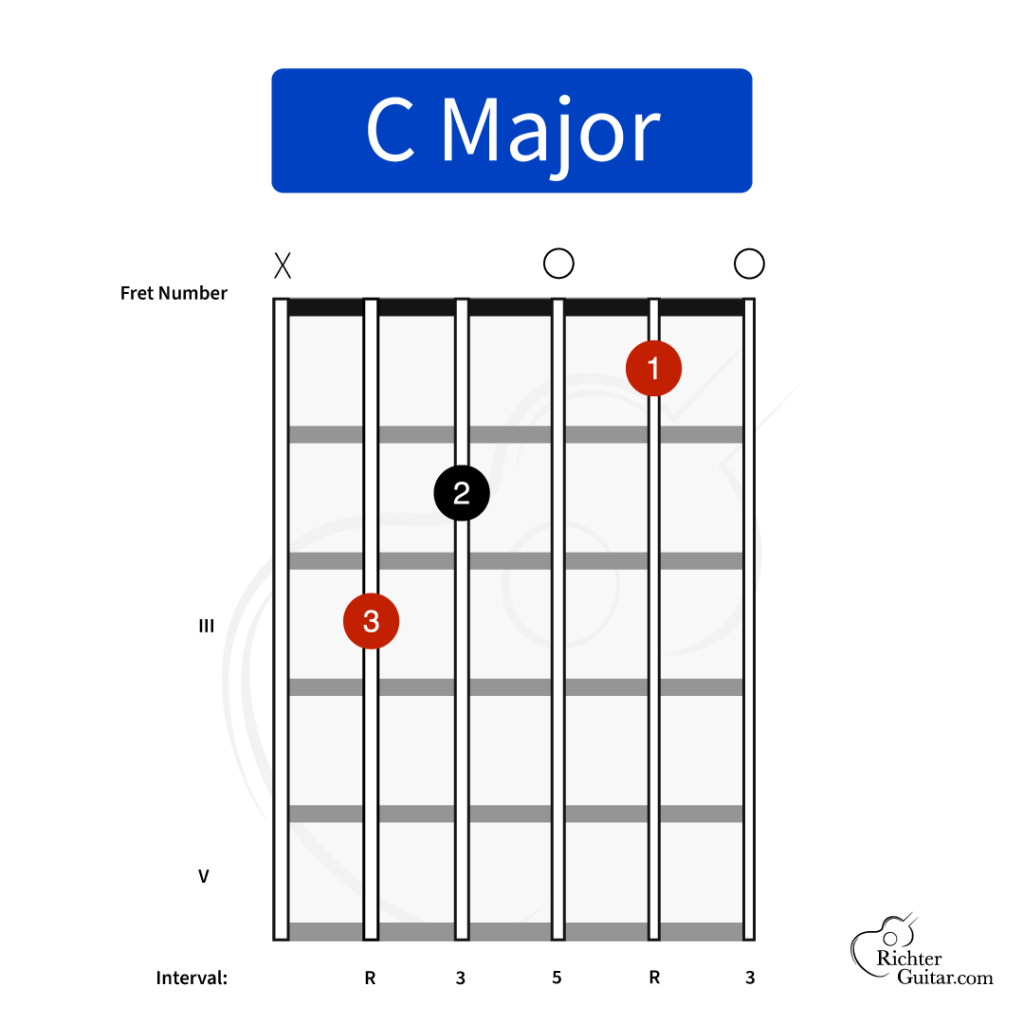

Chord Chart
Verse 1

G        C            D        G
How many roads must a man walk down,
           C          G
before you call him a man
G        C           D          G
How many seas must a white dove sail,
           C             D
before she sleeps in the sand
         G        C              D           G
Yes, and how many times must the cannonballs fly,
               C       G
before they're forever banned

Chorus 1

C            D        G                C
The answer my friend is blowin' in the wind
              D              G
The answer is blowin' in the wind

Harmonica Refrain

| C  D  | G  C  | C  D  | G     |

Verse 2

         G        C           D         G
Yes, and how many years can a mountain exist,
             C             G
before it is washed to the sea
         G        C              D      G
Yes, and how many years can some people exist,
               C             D
before they're allowed to be free
         G        C           D            G
Yes, and how many times can a man turn his head,
                     C           G
and pretend that he just doesn't see

Chorus 2

C            D        G                C
The answer my friend is blowin' in the wind
              D              G
The answer is blowin' in the wind

Harmonica Refrain

| C  D  | G  C  | C  D  | G     |

Verse 3

         G        C            D        G
Yes, and how many times must a man look up,
              C       G
before he can see the sky
         G        C         D       G
Yes, and how many ears must one man have,
              C           D
before he can hear people cry
         G        C              D            G
Yes, and how many deaths will it take till he knows,
              C           G
that too many people have died

Chorus 3

C            D          G              C
The answer my friend is blowin' in the wind
              D              G
The answer is blowin' in the wind

Harmonica Outro

| C  D  | G  C  | C  D  | G     |
About the D → G transition (the song’s trickiest move)
Here’s a clean strategy: while still holding D, put your pinky down first on the high E string at the 3rd fret (G). Then move fingers 2 and 3 up to the bass string: finger 2 to the A string (string 5) and finger 3 to the low E string (string 6).
Your pinky stays anchored on the high E string throughout, giving the change a smooth pivot point. Check out the YouTube short to see this in action.
Practice Tips
- The whole song moves between just three chords: G, C, and D. Master the G → C → D loop on its own and you’ve got every verse and chorus.
- Drill the D → G transition specifically using the pinky-anchor strategy in the note above. It’s the song’s trickiest move, and it appears in every line of the verse.
- The harmonica refrain between sections is written as | C D | G C | C D | G |. Those vertical bars mark musical measures. If you don’t have a harmonica handy, hum or whistle the iconic melody or strum the chords through to fill the space.
- “Blowin’ in the Wind” is a folk standard meant to be sung slowly and deliberately. Let each line breathe — the song’s power is in the words and the pause between them.